UK Winter Car Emergency Kit Checklist: What to Keep in the Boot
Aligned with National Highways & GOV.UK winter driving advice — flat 12V batteries, snow closures, EVs and Highway Code safety.
10-Minute Action Summary
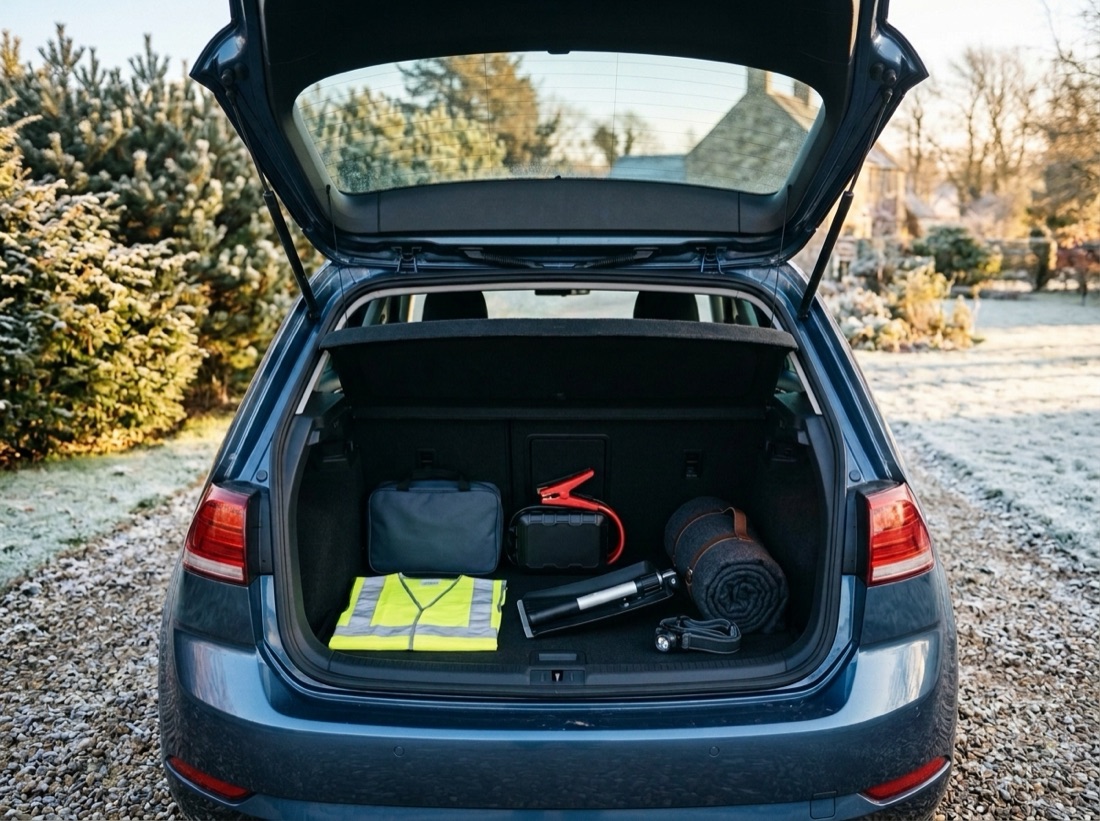
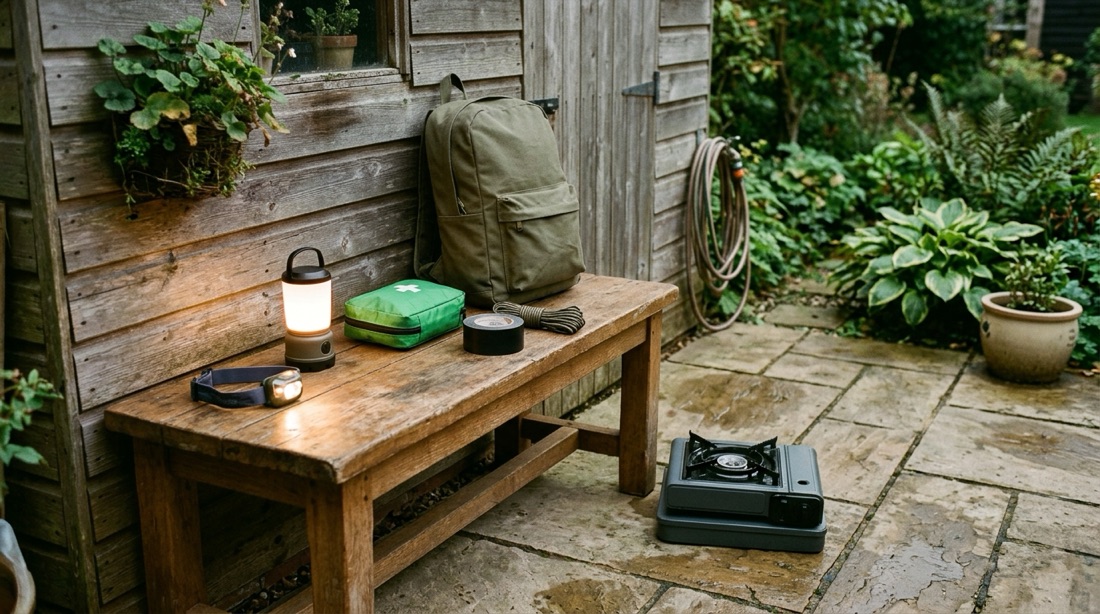
- [✓]Keep EN ISO 20471 high-vis vests + head torch inside cabin door pockets (not buried under boot luggage)
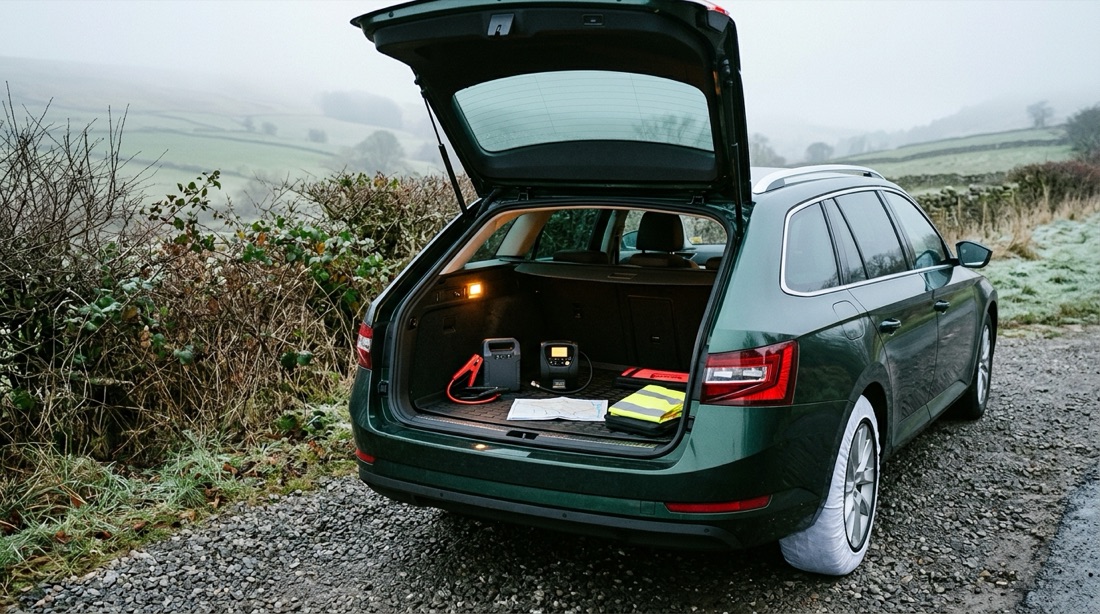
- [✓]Pack a spark-proof 12V lithium jump starter (essential for petrol, diesel AND electric vehicles)
- [✓]Carry warm fleece blankets, reusable thermal bivvy bags, spare wool socks & waterproof shell/poncho
- [✓]Store 5-year Seven Oceans ration bars + bottled water (leave slight airspace if freezing)
- [✓]Add AutoSock tyre socks, folding shovel, scraper/de-icer, 12V tyre inflator & spiral GB paper road atlas
1. Solving the Two Most Common Winter Breakdowns Yourself
During a cold snap, roadside recovery wait times stretch past 4–6 hours. Over half of winter callouts are flat 12V batteries and tyre pressure/puncture issues — both solved in five minutes with a NOCO lithium jump pack and a Ring 12V digital inflator.
2. Staying Warm & Safe if Stuck on a Snowbound A-Road
If traffic stops completely in heavy snow, conserve fuel/EV traction battery by wrapping in thermal blankets first, running the heater intermittently only after checking the exhaust tailpipe is completely clear of drifted snow (blocked exhausts push lethal carbon monoxide into the cabin).
“Keep high-vis vests in the front door pockets, never under the boot floor — put them on BEFORE stepping onto a dark verge.”
Frequently Asked Questions
Should you place a warning triangle on a UK motorway?
Never — Highway Code Rule 274 explicitly states you must NOT use a warning triangle on a motorway. Use triangles only on ordinary A/B roads placed at least 45 metres (50 paces) behind the vehicle on the same side of the road.